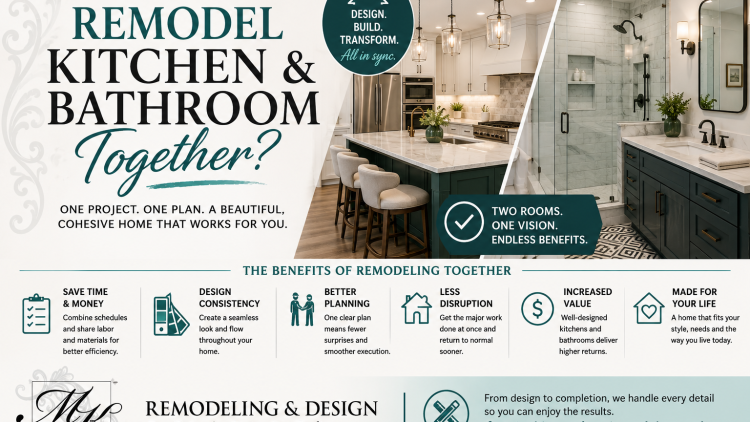
Remodel Kitchen and Bathroom Together in Mesa?
Should You Remodel Your Kitchen and Bathroom at the Same Time?
A kitchen and bathroom are the two rooms most homeowners depend on every day. Remodeling both during the same project can create a more consistent design and reduce the number of separate construction periods. It can also leave the household without its most important spaces at once.
The right answer depends on budget, available bathrooms, layout changes and how comfortably the family can manage the disruption. The decision should be made during planning, not after the first room has already been demolished.
Look at the Complete Scope
Write down what each room actually needs. A kitchen may require new cabinets, counters and flooring while keeping the existing plumbing locations. A bathroom project might involve a new shower, vanity, lighting and a relocated drain.
The rooms do not need the same level of work. Combining them can still make sense when one is a complete remodel and the other is a smaller update. The contractor needs a clear scope for both before pricing, scheduling and ordering begin.
Consider the Design Advantages
Connected finishes can make the house feel more intentional. Cabinet colors, countertop materials, flooring, hardware and lighting do not need to match exactly, but they can belong to the same design family.
Planning the rooms together also helps avoid choices that become difficult to coordinate later. A homeowner who selects every kitchen finish first may discover that a discontinued color, changed cabinet line or different metal finish complicates the bathroom project.
MK Remodeling provides design consultation, CAD presentation drawings, cabinetry, countertops, tile, flooring, lighting and finish guidance, allowing several rooms to be considered as one plan.
Ask Whether the Work Can Share Trades
Kitchen and bathroom projects commonly involve cabinetry, countertops, tile, plumbing, electrical work, painting and flooring. One coordinated project may allow trades and deliveries to be scheduled more efficiently than two unrelated remodels.
That does not mean combining rooms automatically cuts the price dramatically. Each room still requires labor and materials. The advantage may come from shared planning, fewer separate mobilizations and one overall construction schedule.
Be Honest About Daily Disruption
Losing a kitchen is inconvenient. Losing the kitchen and the only working bathroom may make staying home unrealistic. Families with more than one bathroom may be able to keep one available while the other is rebuilt.
Ask for a room by room sequence. Some projects can start one space while materials for the other are being prepared. Others work best when demolition and rough trade work happen together. Children, pets, remote work and health needs should be part of the discussion.
Review Permits and Inspections
Interior structural, electrical, mechanical and plumbing modifications may require permits in Mesa. A combined project can involve several inspections, particularly when walls move or building systems change.
The contractor should identify which permits apply, who will obtain them and how inspections fit into the schedule. Homeowners should also verify the required Arizona contractor license and make sure the written agreement describes the work, dates and responsibilities.
Protect the Budget With Complete Selections
Two rooms create more opportunities for late decisions. Choose cabinets, tile, plumbing fixtures, lighting, hardware and major appliances before construction reaches the point where they are needed.
Ask for a written breakdown showing each room and any shared costs. Keep a contingency for concealed plumbing, electrical or wall conditions. When the budget is tight, it may be wiser to complete one room properly and plan the second for later rather than weakening both projects.
Decide Whether One Project Fits Your Household
Remodeling both rooms together suits homeowners who want one coordinated design, can manage the temporary loss of space and have financing for the complete scope. Separate projects may be better when the household needs a working bathroom, the second design remains uncertain or the budget needs time to recover.
A planning meeting should compare both approaches before a schedule is promised. The most efficient project is the one whose design, budget and sequence have been settled clearly.
Plan a Coordinated Remodel With MK Remodeling
MK Remodeling and Design is a family owned Mesa firm providing kitchen, bathroom and whole home remodeling across the East Valley. Its team manages design, product selection and workmanship so connected spaces can be planned around the same household priorities. Call 480 677 9829 to schedule an estimate and compare a combined kitchen and bathroom remodel with a practical phased approach.
References
MK Remodeling Home Remodeling Services
MK Remodeling Kitchen Remodeling
MK Remodeling Bathroom Remodeling
City of Mesa Residential Construction